You’re comparing two loan offers. One advertises 11% interest. The other says 12%. The first one looks cheaper, so you go with it. Then you notice a number labeled “APR” that tells a different story. What is APR
So, what is APR, and why do lenders make such a big deal of it? In short, APR is the most honest number on a loan offer. It shows the yearly cost of borrowing, not just the interest.
This guide explains what is APR, how it differs from your interest rate, how it works on credit cards and mortgages, and seven simple ways to use it when you compare offers.
What Is APR?
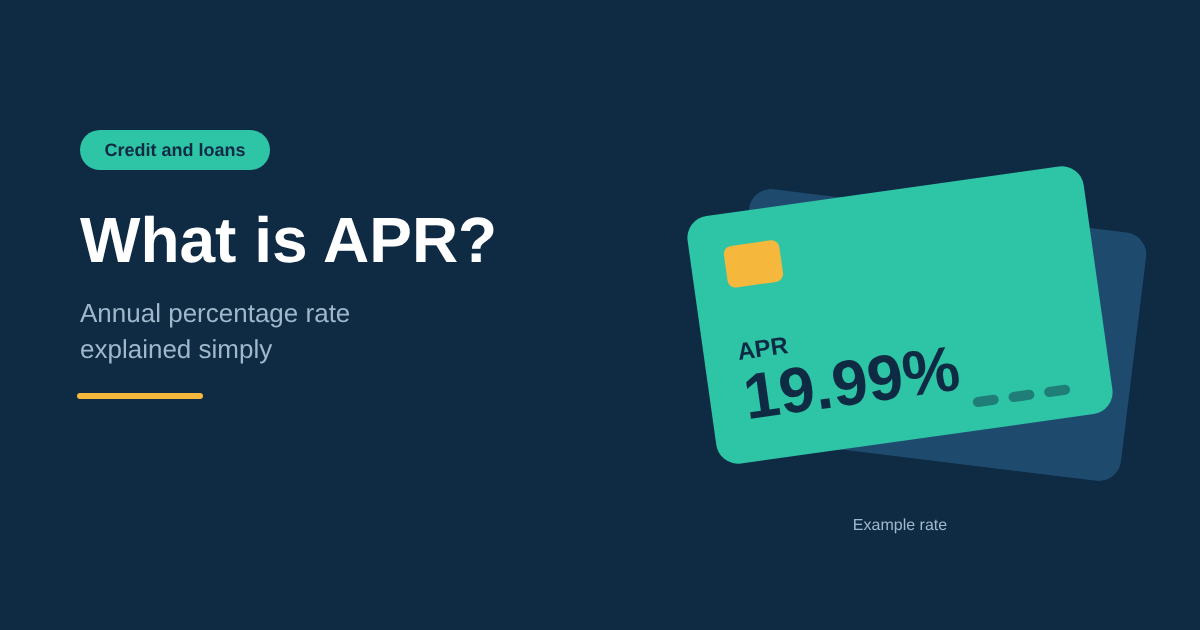
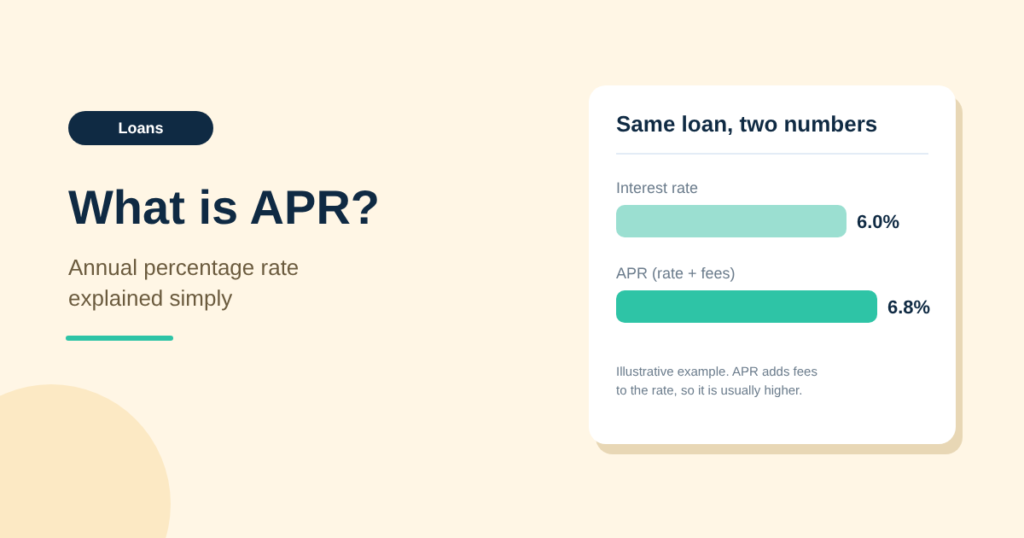
APR stands for annual percentage rate. It’s the yearly cost of borrowing money, shown as a percentage. Unlike the plain interest rate, APR also folds in certain fees the lender charges.
That’s why it’s useful. Two lenders might quote the same interest rate but charge very different fees. APR puts both offers on the same scale.
Federal law helps here. Under the Truth in Lending Act, lenders must disclose the APR on most consumer loans and credit cards, so you can compare offers side by side. For a deeper definition, see Investopedia’s APR guide.
What APR Usually Includes
The exact list depends on the loan, but APR often reflects:
- The interest rate
- Origination fees (a fee some lenders charge for processing the loan)
- Certain other lender charges, like mortgage points
It doesn’t capture everything. Late fees, for example, usually aren’t baked in, because you may never pay them.
A Simple Example
To see what is APR doing in real dollars, take a $10,000 loan with a 12% interest rate and a 36-month term. The monthly payment is about $332. (This is a hypothetical example.)
Now add a 5% origination fee. The lender takes $500 off the top, so you receive $9,500 but still repay based on $10,000. Because you’re paying the same amount for less cash, the APR rises to roughly 15.6%.
Same interest rate. Higher true cost. The APR is what shows it.
APR vs. Interest Rate: What’s the Difference?
Knowing what is APR also means knowing how it differs from the interest rate. They’re related, but they measure different things.
| Feature | Interest Rate | APR |
|---|---|---|
| What it measures | The cost of borrowing the principal | The broader yearly cost, including certain fees |
| Includes fees? | No | Often yes |
| Best use | Estimating your interest charges | Comparing offers from different lenders |
| Typical result | Lower number | Equal to or higher than the interest rate |
If a loan has no fees, the APR and the interest rate can be the same. When fees are involved, APR will usually be higher.
APR vs. APY: Don’t Mix Them Up
Here’s another question that follows what is APR: how is it different from APY?
APR is mostly used for borrowing. APY, or annual percentage yield, is mostly used for savings and deposit accounts. The key difference is compounding. APY includes the effect of interest earning interest during the year. APR, in most simple quotes, doesn’t.
For example, a 5% rate compounded monthly produces an APY of about 5.12%. When you’re saving, you want a higher APY. When you’re borrowing, you want a lower APR.
Many online banks and neobanks advertise high APYs on savings, and our explainer on what a neobank is covers how they work. Whichever you pick, confirm your deposits are FDIC-insured.
What Is APR on a Credit Card?
Credit cards use APR differently from loans. Instead of a fixed payment schedule, you have a revolving balance, and the APR is the yearly rate applied to whatever you carry.
Most cards list several APRs:
- Purchase APR: Applies to everyday spending you don’t pay off.
- Balance transfer APR: Applies to debt moved from another card.
- Cash advance APR: Often higher, and interest usually starts right away.
- Penalty APR: A higher rate that can kick in after late payments.
- Introductory APR: A low or 0% rate for a limited time, after which the regular rate applies.
Most card APRs are variable. That means they’re tied to a benchmark like the prime rate, which tends to move after the Federal Reserve changes its target for short-term rates. You can read how those decisions are made on the Federal Reserve’s page.
The Grace Period
Here’s good news. If you pay your full statement balance by the due date each month, you generally won’t pay interest on new purchases. That’s the grace period. Your APR only costs you money when you carry a balance. Check your card agreement for the exact terms.
How Fast Card Interest Adds Up
Issuers often divide your APR by 365 to get a daily rate and apply it to your balance. Say you carry $2,000 at 24% APR for a year without paying it down. That’s roughly $480 in interest, and a bit more with compounding. (Simplified and hypothetical.)
The Rule of 72 shows why this is dangerous. At 24%, a balance left alone can roughly double in about three years (72 ÷ 24 = 3).
What Is APR on a Mortgage?
Mortgages work like loans, but with bigger numbers, so the gap between rate and APR matters more. A mortgage APR typically includes the interest rate plus costs like discount points and some lender fees.
Two things to remember. First, APR assumes you keep the loan for its full term. If you’ll sell or refinance in a few years, the upfront fees weigh more heavily on you than the APR suggests. Second, adjustable-rate mortgages can change, so the APR is based on assumptions that may not hold.
When you get a Loan Estimate, the APR appears on page 3. The CFPB’s Ask CFPB resource answers common questions about interest rates, APR, and mortgage costs.
What Is a Good APR?
There’s no single answer, because “good” depends on the type of loan, the current market, and your credit. A good APR for a mortgage looks nothing like a good APR for a credit card.
What shapes the APR you’re offered:
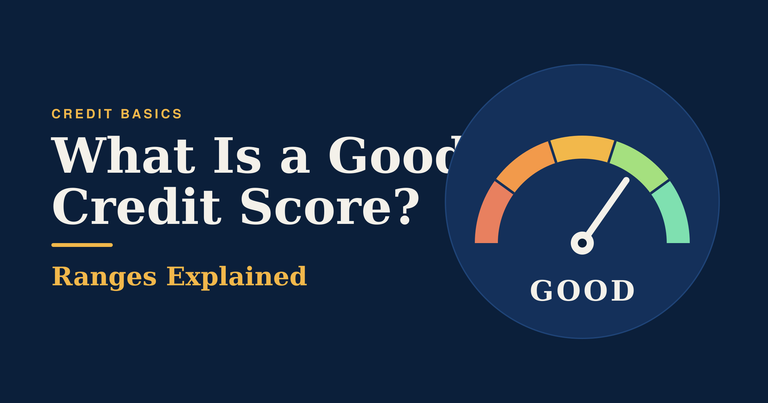
- Credit score and history. Stronger credit usually earns lower rates.
- Income and existing debt. Lenders weigh your ability to repay.
- Loan term. Terms can change the rate you’re offered.
- Secured vs. unsecured. Loans backed by collateral often cost less.
- Market rates. When the Fed raises rates, many borrowing costs follow.
So instead of chasing a magic number, compare real offers for the same product.
7 Simple Ways to Use APR When You Borrow
1. Compare APR to APR
Line up offers for the same type of loan, with the same amount and term. Apples to apples is the whole point.
2. Check Whether the Rate Is Fixed or Variable
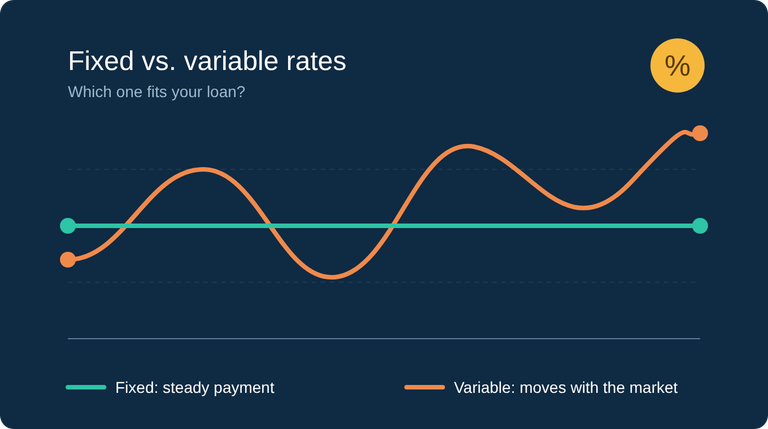
A variable APR can rise after you sign. Ask how often it can change and whether there’s a cap. If uncertainty makes you uneasy, our breakdown of risk tolerance can help you decide how much you can handle.
3. Look at the Total Cost, Not Just the Payment
A lower monthly payment on a longer term can mean far more total interest. Multiply payment by months, then compare.
4. Read Every Fee
Ask about origination fees, late fees, prepayment penalties, and annual fees. If the APR seems low, check what it leaves out.
5. Understand How Interest Is Calculated
Ask whether interest compounds daily or monthly, and how payments are applied. On cards, pay attention to the grace period.
6. Borrow Only What You Truly Need
The cheapest APR is the one you never pay. Sorting essentials from extras makes this easier, and our guide on needs vs wants can help you trim what you borrow.
7. Look for Ways to Lower Your APR
You can improve your odds by checking your credit reports for errors, paying down balances, and comparing several lenders. With credit cards, some issuers will review your rate if you ask, though they aren’t required to lower it.
Common APR Mistakes
Even people who understand what is APR make these slips:
- Comparing the interest rate instead of the APR. Fees can flip which offer is cheaper.
- Assuming 0% introductory APR lasts forever. Check when it ends and what the regular rate becomes.
- Carrying a card balance. Interest on revolving debt adds up quickly.
- Ignoring the penalty APR. One late payment can trigger a much higher rate.
- Judging only by the monthly payment. A long term can hide a high total cost.
- Skipping the fine print. Fees and rate changes are listed in your agreement.
- Assuming APR includes every cost. Some charges fall outside of it.
FAQ: What Is APR?
What is APR in simple terms?
It’s the yearly cost of borrowing, shown as a percentage. It includes your interest rate plus certain fees, so it’s a better way to compare loan offers.
Is APR the same as the interest rate?
Not always. If a loan has no fees, they can match. When there are fees, the APR is usually higher than the interest rate.
Is a lower APR always better?
Usually, but check the details. A low APR on a long term can still cost more in total interest than a slightly higher APR on a shorter term.
What’s the difference between APR and APY?
APR is mostly used for borrowing costs. APY is mostly used for savings and includes the effect of compounding. When you borrow, aim for a low APR. When you save, aim for a high APY.
How is credit card APR calculated?
Issuers typically convert your APR into a daily rate and apply it to your balance. If you pay your full balance by the due date, you usually avoid interest on purchases.
Can my APR change?
Yes, if it’s variable. A fixed APR stays the same unless the lender follows required notice rules to change it. Your credit card agreement explains when and how changes can happen.
Final Thoughts on What Is APR
So, what is APR? It’s the closest thing to a price tag for borrowing money. It won’t tell you everything, but it makes comparing offers fairer and exposes fees that a headline rate can hide.
Here’s your next step. Pull up your credit card statement or latest loan offer and find the APR. Is it fixed or variable? What would a year of interest cost at your current balance? Then explore our guides on needs vs wants and risk tolerance to borrow with more confidence.
Disclaimer: This article is for educational purposes only and is not personalized financial, legal, or tax advice. All numbers are hypothetical examples. Loan terms, rates, and fees vary by lender and borrower. Consult a qualified professional before making borrowing decisions.