Scroll through social media and you’ll find someone promising to make thousands a month while they sleep. Almost none of them mention how much work, money, or luck it took to get passive income there.
This guide takes a more honest route. You’ll get nine passive income ideas that people really use, what each one demands up front, the risks involved, and how to choose a fit for your budget and schedule. No hype, no guarantees.
What Is Passive Income?
Passive income is money you earn with little ongoing effort once the initial work or investment is done. The IRS has its own definition for tax purposes, which generally covers rental activity and businesses where you don’t materially participate. You can read how it treats these categories in IRS Publication 925. For a plain-language overview, see Investopedia’s passive income guide.
Here’s the part most articles skip. Passive rarely means effortless. Nearly every source of passive income needs one of two things up front: your time or your money. Build a course, and you pay in hours. Buy a rental, and you pay in capital. The “passive” part comes later, and even then it usually needs some upkeep.
So think of passive income as income that’s less active, not income that’s free.
Realistic Passive Income: What to Expect
Before the list, a few honest ground rules for realistic passive income:
- It takes a head start. You typically invest time or money before earning anything.
- It starts small. Early results are often modest, and some projects earn nothing.
- It carries risk. Investments can lose value, and businesses can fail.
- It’s rarely 100% hands-off. Expect maintenance, customer questions, or occasional decisions.
- Taxes still apply. Most passive income is taxable, so plan for it.
Keep these in mind and you’ll spot unrealistic promises quickly.
9 Proven Passive Income Ideas
1. High-Yield Savings Accounts and CDs
This is the simplest option and the lowest risk. You deposit money at an insured bank and earn interest. Certificates of deposit (CDs) lock your money for a set term, often in exchange for a fixed rate.
Upfront cost: Whatever you can deposit. Effort: Almost none. Risk: Low, as long as the bank is FDIC-insured. You can confirm coverage on the FDIC deposit insurance page.
Rates change with the economy, and inflation can erode what the interest buys. Online banks and neobanks sometimes pay more than traditional branches, so compare, and always check who holds your deposits.
2. Dividend Stocks and Dividend Funds
Some companies share part of their profits with shareholders as dividends. Many investors hold individual dividend-paying stocks or funds that bundle many of them. Dividend income can arrive quarterly and may grow over time, but it isn’t guaranteed.
Upfront cost: Varies; fractional shares make small starts possible. Effort: Low after setup. Risk: Moderate to high. Companies can cut dividends, and share prices can fall. If you’re new to this, start with our guide on how the stock market works.
3. Index Funds and ETFs
Broad index funds spread your money across many companies, and you earn through price growth and dividends. This isn’t a monthly paycheck in the same way, but it’s one of the most common long-term wealth builders.
Upfront cost: Often low. Effort: Minimal. Risk: Moderate; the market can drop. Consider your comfort with swings first. Our risk tolerance guide can help. The SEC’s Investor.gov offers free beginner education on the risks.
4. Treasury Securities and I Bonds
US Treasury securities are backed by the federal government. Options include Treasury bills, notes, bonds, and inflation-linked choices like TIPS and Series I savings bonds. You can buy them directly through TreasuryDirect.
Upfront cost: Varies by product, and I bonds have purchase limits. Effort: Low. Risk: Low credit risk, though prices of some securities can fluctuate if you sell early.
5. Rental Income
Owning property and renting it out can generate steady cash flow. It can also bring repairs, vacancies, difficult tenants, insurance, taxes, and maintenance costs. Hiring a property manager reduces your workload but also reduces your profit.
Upfront cost: High. A down payment, closing costs, and a repair reserve add up. Effort: Moderate to high unless you outsource. Risk: Moderate to high, since you’re also exposed to debt and local market swings.
If a full property is out of reach, some people rent out a spare room or a parking space instead. Check local rules, lease terms, and tax obligations first.
6. Real Estate Investment Trusts (REITs)
REITs let you invest in real estate without buying or managing property. Many trade like stocks, and they’re required to pay out a large portion of income to shareholders, which can mean regular distributions. Investopedia’s REIT explainer covers the structure.
Upfront cost: Low to moderate. Effort: Minimal. Risk: Moderate. REIT prices can swing with interest rates and property markets.
7. Digital Products
Ebooks, templates, printables, online courses, stock photos, and music samples can be created once and sold repeatedly. This is a classic way to turn skills into an asset.
Upfront cost: Mostly your time, plus software or platform fees. Effort: High at the start; lower later, though marketing and customer support continue. Risk: Many products sell little. Income is uncertain and often slow to build.
8. Royalties and Content
Writers, musicians, photographers, YouTubers, and bloggers may earn from ads, affiliate links, or royalties on work they’ve already made. Success usually depends on building an audience, which takes consistency.
Upfront cost: Low in money, high in time. Effort: Heavy at first, then lighter, but content needs updating. Risk: High variance. Plenty of creators earn little for a long time, and platform rules can change overnight.
9. Peer-to-Peer Lending and Other Alternatives
Some platforms let you lend money to borrowers in exchange for interest. Others offer crowdfunding or alternative assets. These can pay more, but they usually carry higher risk, including borrower defaults, limited liquidity, and weaker protections.
Upfront cost: Varies. Effort: Low to moderate. Risk: High. These are not covered by FDIC insurance. Research any platform carefully, and never invest money you can’t afford to lose.
Passive Income Ideas Compared
Here is a side-by-side look. These are general patterns, not promises.
| Idea | Upfront Money | Upfront Effort | Ongoing Effort | Risk Level |
|---|---|---|---|---|
| High-yield savings / CDs | Low to moderate | Very low | Very low | Low |
| Treasury securities / I bonds | Low to moderate | Low | Very low | Low |
| Index funds / ETFs | Low | Low | Very low | Moderate |
| Dividend stocks / funds | Low to moderate | Low | Low | Moderate to high |
| REITs | Low to moderate | Low | Very low | Moderate |
| Rental property | High | Moderate | Moderate to high | Moderate to high |
| Digital products | Low | High | Low to moderate | High |
| Content / royalties | Low | High | Moderate | High |
| Peer-to-peer lending | Low to moderate | Low | Low | High |
Notice the trade-off. Ideas that need little effort usually need money. Ideas that need little money usually demand effort. That’s the central truth behind passive income ideas.
How to Choose the Right Passive Income Idea
Not every idea fits every person. Ask yourself:
- What’s my foundation? Do I have an emergency fund and manageable debt? If not, fix that first.
- Do I have more time or more money? Your answer points toward different options.
- How much risk can I stomach? A sudden drop in value shouldn’t cost you sleep.
- What’s my timeline? Some options pay slowly over years.
- What do I already know? Skills you have make digital products and content easier.
Be honest about your budget too. If you’re not sure how much you can set aside, our needs vs wants guide helps you find room. And if saving is the challenge, our habit guide on how to pay yourself first can help you automate it.
Why Starting Early Matters
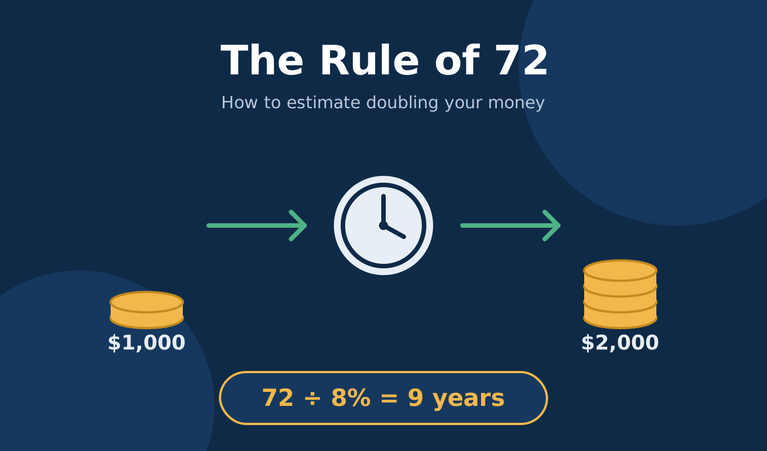
Time is the secret ingredient behind most income streams that grow. Reinvesting earnings lets your returns generate their own returns. The Rule of 72 shows how long money takes to double at a given rate. Returns vary and aren’t guaranteed, but the math shows why a small, consistent start beats waiting for a big one.
Common Mistakes to Avoid
- Believing “get rich quick” promises. If it sounds effortless and guaranteed, be skeptical.
- Skipping the emergency fund. Passive income projects can stall. A cushion protects you.
- Putting everything in one source. Diversifying reduces the damage if one stream dries up.
- Ignoring taxes. Interest, dividends, rental income, and business income are generally taxable. Learn the rules or consult a professional.
- Paying for expensive courses first. Many people spend heavily on programs promising passive riches. Research before you buy.
- Underestimating the work. “Passive” often means front-loaded effort, not none.
- Chasing high yields. An unusually high payout often signals high risk.
- Using borrowed money carelessly. Debt magnifies losses as well as gains.
Spotting Scams
Be wary of anything that promises guaranteed returns, urgent deadlines, or secret systems. Pressure to recruit others, vague explanations of how profit is made, and requests for payment in unusual forms like gift cards or crypto are classic red flags. Before investing, check the seller’s registration through the SEC’s investor tools and read warnings at Investor.gov. If you’re unsure, pause and ask a licensed professional.
Frequently Asked Questions
What are the best passive income ideas for beginners?
Low-effort, lower-risk options like high-yield savings accounts, CDs, Treasury securities, and broad index funds are common starting points. Content and digital products can work too, but they demand more time and carry more uncertainty.
Is passive income really passive?
Rarely completely. Most sources require upfront work or money, and many need ongoing maintenance. It’s better to think of it as less active income than as no-effort income.
How much money do I need to start earning passive income?
It depends on the idea. Savings accounts and index funds can start small. Rental property requires much more. Digital products may cost little money but a lot of time.
Can I build passive income with no money?
You can start with time instead of money, such as creating content or digital products. Results are uncertain and often slow, so set modest expectations.
Is passive income taxable?
In most cases, yes. Interest, dividends, rental income, and business earnings generally count as taxable income, though rules vary. Check the IRS website or speak with a tax professional.
How long does it take to build passive income?
It varies widely. Investments can grow steadily over years. Content and products may take months or longer to earn anything. Anyone promising a fixed timeline is guessing.
Final Thoughts
The best passive income ideas aren’t magic. They trade your time or your money for income that needs less attention later. Start with a safe foundation, pick one idea that fits your budget and schedule, and give it time.
Choose one option from this list this week and research it. Open an insured savings account, read about index funds, or sketch a simple digital product. Small, steady steps beat flashy shortcuts. For more practical money guidance, keep exploring Growwxritik.
Disclaimer: This article is for educational purposes only and is not financial, legal, tax, or investment advice. All investments and business ventures involve risk, including possible loss of principal, and past performance doesn’t guarantee future results. Consult a qualified professional about your situation.