Your 30s are busy. But maybe Retirement Planning you’re paying off student loans, saving for a home, raising kids, or just trying to get ahead at work. Retirement can feel like a problem for future you.
Here’s the thing, though. Retirement planning in your 30s is one of the most powerful money moves you can make. The reason is time. Money invested now has decades to grow, and that can do more work than almost any raise.
This guide shows you where to start. You’ll get seven simple steps, a clear example with real math, a Roth vs. traditional comparison, and the mistakes to avoid. No jargon, and no pressure to do everything this month.
Why Retirement Planning in Your 30s Matters
Compound growth is the engine. Your money earns returns, and then those returns earn returns. The longer it runs, the faster it snowballs.
Let’s use hypothetical numbers. Say you invest $500 a month and earn an average of 7% a year until age 65. Real returns vary and aren’t guaranteed, and this example ignores fees, taxes, and inflation.
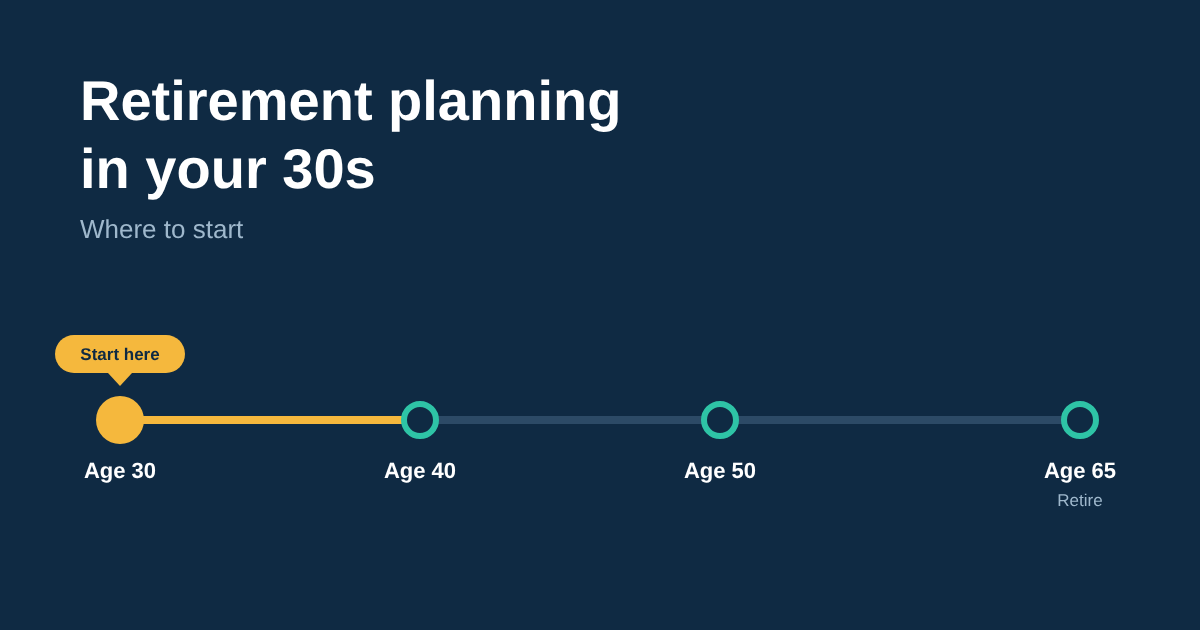
- Start at 30: You contribute about $210,000 over 35 years. The balance grows to roughly $900,000.
- Start at 40: You contribute about $150,000 over 25 years. The balance grows to roughly $405,000.
Waiting ten years costs about $495,000 in this example, even though you’d have put in only $60,000 less.
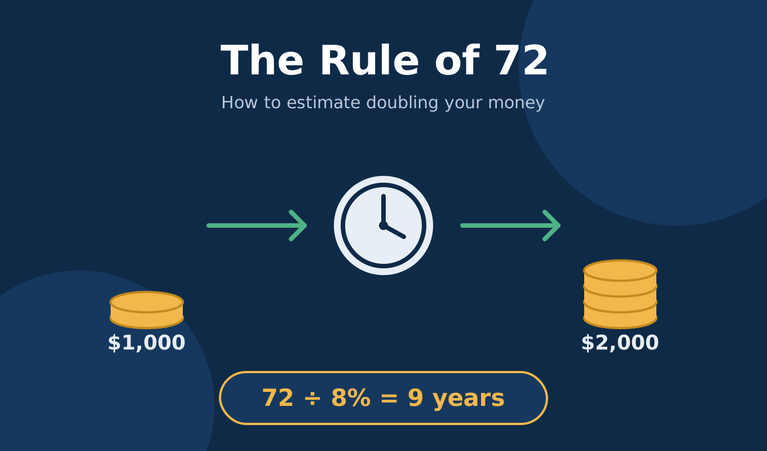
The Rule of 72 shows the same idea. Divide 72 by 7 and you get about 10, so money growing at 7% roughly doubles every decade. That’s why retirement planning rewards early starters, even with modest amounts.
The good news is that your 30s still leave plenty of runway. You haven’t missed anything. You just have a strong reason to start now.
7 Simple Steps for Retirement Planning in Your 30s
Here’s a practical order of operations. You don’t have to finish all seven this month.
1. Estimate Your Target
You don’t need an exact figure. Ask two questions: at what age do you hope to stop working, and what lifestyle do you want? A common rule of thumb is to aim to replace roughly 70% to 80% of your pre-retirement income, though your needs may differ.
Then play with the numbers. The SEC’s compound interest calculator on Investor.gov lets you test different monthly amounts and time frames.
2. Get Your Employer Match First
If your employer matches 401(k) contributions, start there. A match is part of your pay.
Say you earn $70,000 and your employer matches 100% of contributions up to 4% of pay. Contributing 4% means $2,800 from you and another $2,800 from your employer. That’s an instant doubling before any investment growth.
Match formulas and vesting schedules differ, so check your plan documents. The IRS has an overview of 401(k) plans.
3. Cover the Basics So Your Savings Stick
Smart retirement planning doesn’t mean ignoring today. Build a small emergency fund so a car repair doesn’t force you to raid your retirement account. Pay down high-interest debt too, because a 24% credit card rate can outrun most investment returns.
If money feels tight, sort your spending first. Our guide on needs vs wants can help you find room in your budget without feeling deprived. Many online banks and neobanks also let you create separate savings buckets, and our explainer on what a neobank is shows how they work.
4. Consider an IRA for More Options
An individual retirement account (IRA) is one you open yourself, outside of work. You choose the provider, the investments, and the type: traditional or Roth.
Annual contribution limits and income rules change, so check the IRS page on individual retirement arrangements for current figures.
5. Choose Simple, Low-Cost Investments
You don’t need to pick stocks. Many people use a target-date fund, which shifts from growth-focused to more conservative as the target year nears. Others use broad index funds. Compare fees, called expense ratios, because costs eat into returns year after year.
How much risk should you take? That depends on your comfort with ups and downs. Our breakdown of risk tolerance can help you decide before the market tests you.
6. Automate and Nudge It Up
Set contributions to come out of your paycheck automatically. Then raise the percentage by 1 point each year or whenever you get a raise. You’ll barely feel it, and your balance will.
7. Review Once a Year
Retirement planning isn’t a one-time project. Once a year, check your contribution rate, your investments, and your beneficiaries.
Also track down any old 401(k)s from past jobs. You can usually leave the money, roll it into your new plan or an IRA, or cash it out. Cashing out can trigger income tax and an early-withdrawal penalty, so think twice.
Roth vs. Traditional Accounts for Retirement Planning
Both Roth and traditional accounts come in 401(k) and IRA versions. The main difference is when you pay taxes.
| Feature | Traditional | Roth |
|---|---|---|
| Tax break | Contributions may reduce your taxable income now | No upfront tax break |
| Withdrawals in retirement | Generally taxed as ordinary income | Qualified withdrawals are tax-free |
| May suit you if | You want a lower tax bill today or expect a lower tax rate later | You expect a similar or higher tax rate later |
| Early withdrawals | Taxes plus a possible penalty before age 59½ | Special rules apply; check before taking money out |
Many people use both for tax diversification. Rules, income limits, and available options vary, so confirm the details with the IRS or a tax professional.
How Much Should You Save in Your 30s?
No single number fits everyone in retirement planning, but benchmarks can help. A common rule of thumb is to save around 15% of your income, including any employer match. One often-cited guideline from Fidelity suggests having about one times your salary saved by 30 and about three times by 40.
Treat these as rough signposts, not pass-fail tests. If you’re behind, start where you are. Even 3% to 5%, raised a point or two each year, builds momentum.
Common Retirement Planning Mistakes
Most retirement planning mistakes come from delay, not bad math. Watch out for these:
- Waiting for the “right time.” There isn’t one. Start small.
- Skipping the employer match. That’s free money left on the table.
- Cashing out a 401(k) when changing jobs. Taxes and penalties can take a big bite.
- Ignoring fees. High expense ratios compound against you.
- Investing without a plan. Being too conservative or too aggressive for your comfort level can backfire.
- Having no emergency fund. Without one, you may be forced to tap retirement money early.
- Chasing hot tips. Trends fade. Consistency wins.
- Forgetting beneficiaries. Outdated forms can send money to the wrong person.
- Counting on Social Security alone. It’s meant to replace only part of your income.
FAQ: Retirement Planning in Your 30s
How much should I save for retirement in my 30s?
A common rule of thumb is around 15% of income, including any employer match. If that’s out of reach right now, start smaller and increase gradually. Consistency matters more than the starting number.
Should I pay off student loans or save for retirement first?
It depends on your interest rates and options. A reasonable middle path for many people is to contribute enough to earn the full employer match while making progress on higher-interest debt. A qualified professional can help you weigh your numbers.
Should I use a 401(k) or an IRA?
It isn’t either-or. Many people start with the 401(k) up to the match, then consider an IRA for more investment choices, then return to the 401(k) if they want to save more. Fees, features, and tax rules vary.
What if I’m just starting retirement planning at 38?
You’re not too late. You may have roughly 25 to 30 working years ahead, depending on when you retire. You might need to save a larger share of income than someone who started at 25, so raise contributions steadily and revisit the plan each year.
Is Social Security enough?
For most people, no. It’s designed to replace only a portion of pre-retirement earnings. You can check your personal estimate through your account on the Social Security Administration’s website.
Can I withdraw retirement money early?
Generally, taking money from a traditional 401(k) or IRA before age 59½ means income tax plus an extra 10% tax, with some exceptions. Rules differ by account and situation, so review the IRS guidance before you withdraw.
Final Thoughts on Retirement Planning in Your 30s
Retirement planning in your 30s isn’t about perfection or giant sacrifices. It’s about starting, staying consistent, and letting time do the heavy lifting. A modest amount invested now can outweigh a much larger amount started later.
Here’s your next step. This week, log into your work retirement plan and check two things: whether you’re getting the full employer match, and what percentage you’re contributing. If there’s a gap, close it or raise your rate by 1 point. Then read our guides on risk tolerance and needs vs wants to strengthen your plan.
Disclaimer: This article is for educational purposes only and is not personalized financial, investment, legal, or tax advice. All numbers are hypothetical, investment returns are not guaranteed, and tax rules and contribution limits change. Consult a qualified professional before making financial decisions.