
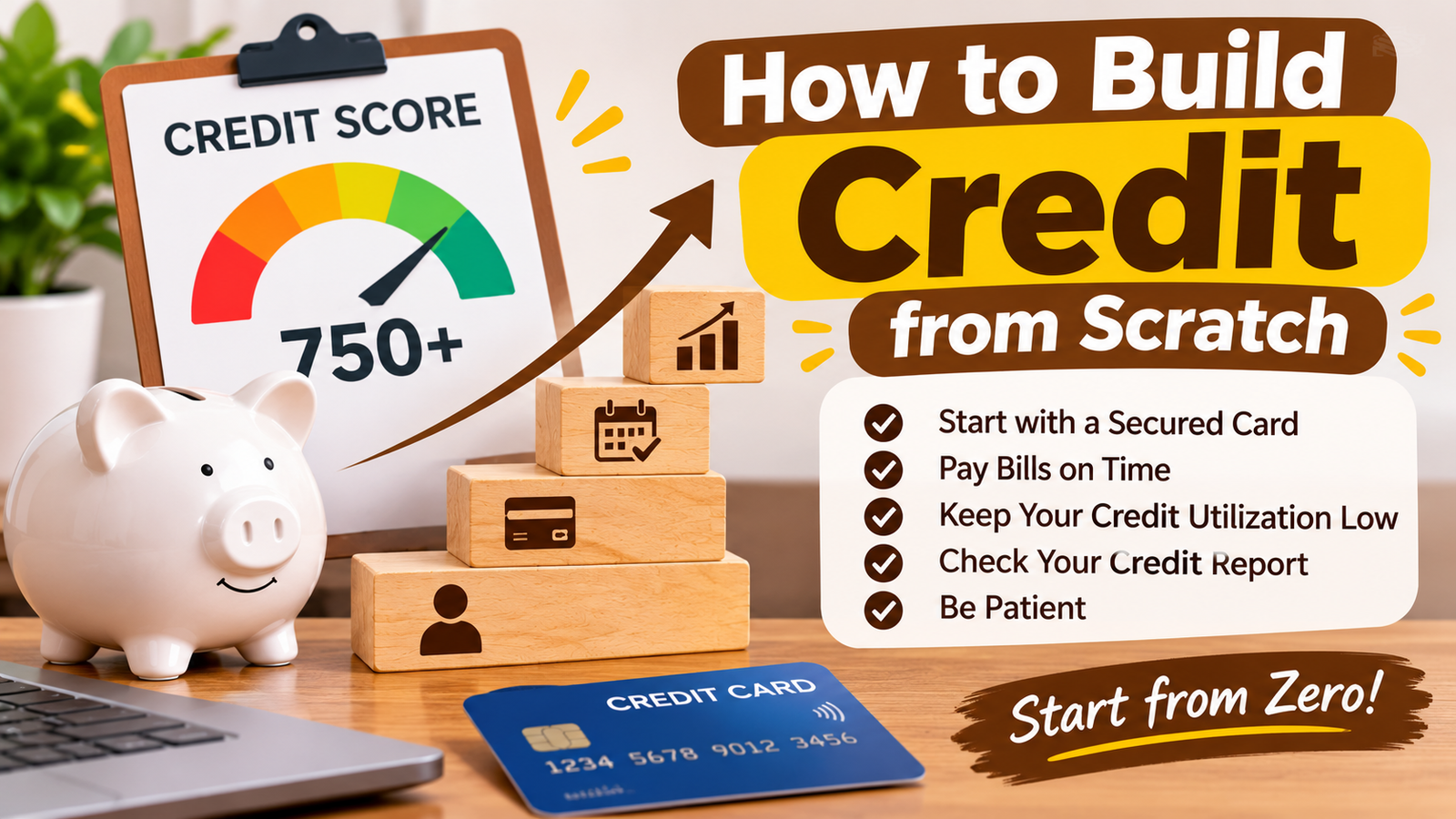
Applying for your first apartment, car loan, or credit card can feel like a catch-22. Lenders want to see a history of responsible borrowing, but you can’t build a history until someone lets you borrow. If you’ve been turned down or never had a score at all, you’re far from alone.
The good news is that you can build credit from scratch, and it doesn’t require a high income or a financial degree. It requires a few smart moves and the patience to repeat them every month.
This guide explains how credit works, the nine steps to build it from nothing, the mistakes that slow people down, and how long it realistically takes.
What Is Credit, and Why Does It Matter?
Credit is your ability to borrow money or access goods and services now, with a promise to pay later. Your credit history is the record of how you’ve handled that promise, and your credit score is a number that summarizes it.
Lenders use your score to decide whether to approve you, and what interest rate to charge. Landlords, insurers, and sometimes employers also check it, depending on where you live.
A strong score can mean lower interest on loans, easier approvals, and lower deposits. A missing or weak one can mean higher costs everywhere. Building credit early is one of the best long-term money moves you can make.
What Does “No Credit” Mean?
Having no credit is different from having bad credit. With no credit, you simply have no track record, so lenders can’t judge you. With bad credit, you have a history of late payments, defaults, or high debt.
Starting from scratch is actually an advantage in one sense: you have a clean slate and can build good habits from day one.
How Credit Scores Are Calculated
Scoring systems vary by country, but most reward the same behaviors. In the United States, the FICO score, which ranges from 300 to 850, is based on five factors:
- Payment history (about 35%): whether you pay on time
- Amounts owed (about 30%): how much of your available credit you use
- Length of credit history (about 15%): how long your accounts have been open
- Credit mix (about 10%): the variety of credit types you manage
- New credit (about 10%): how often you apply for new accounts
Payment history and utilization carry the most weight, so those are where you should focus first. The Consumer Financial Protection Bureau’s credit score resources explain how scores work in more detail.
9 Proven Steps to Build Credit from Scratch
1. Check Your Credit Report
Before you start, find out whether you already have a file. In the U.S., you can get free reports from the three major bureaus at AnnualCreditReport.com. Other countries have their own credit bureaus and access rules.
Look for errors, accounts you don’t recognize, or signs of identity theft, and dispute anything wrong.
2. Open a Starter Account
Everyone needs a first account to begin building history. Common options include a student credit card, a secured credit card, or a small credit-builder loan. Choose one with low or no annual fees and make sure the issuer reports to the credit bureaus.
3. Try a Secured Credit Card
A secured card requires a refundable deposit, which usually becomes your credit limit. Because the deposit protects the lender, approval is much easier, even with no history. Use it for small purchases, pay it off, and over time many issuers will upgrade you to a regular card and return your deposit.
If you’re unsure how credit cards differ from everyday bank cards, [INTERNAL LINK: add a link here to your Growwxritik post on credit cards vs debit cards] breaks it down.
4. Consider a Credit-Builder Loan
With this product, a lender holds the loan amount in a locked account while you make monthly payments. Once you’ve paid it off, you receive the money. Each on-time payment is reported, so you build history while also saving. Credit unions and community lenders often offer these.
5. Become an Authorized User
If a trusted family member or friend has a card with a strong payment history, they can add you as an authorized user. Their positive history may appear on your report. Only do this with someone reliable, since their mistakes could also affect you, and check that the issuer reports authorized users to the bureaus.
6. Pay Every Bill on Time
Payment history is the biggest factor in your score, so make it automatic. Set up automatic payments for at least the minimum amount, and add calendar reminders. A single missed payment can stay on your report for years.
Some services let you report rent, utility, or phone payments to the bureaus, which can help if you have no other accounts. Availability depends on your country.
7. Keep Your Utilization Low
Credit utilization is the share of your available credit that you’re using. If your limit is $500 and your balance is $400, your utilization is 80%, which looks risky. Aim to stay under 30%, and under 10% if you can.
A simple trick: pay your balance down before the statement closes, so a low balance is what gets reported.
8. Don’t Apply for Too Many Accounts at Once
Each application can trigger a “hard inquiry,” which may lower your score slightly. Applying for several cards in a short time can look desperate to lenders. Add one new account at a time and give each a few months to settle.
9. Be Patient and Keep Accounts Open
Length of history matters, so don’t close your oldest account just because you don’t use it much. Make a small purchase every few months and pay it off to keep it active, unless it charges an annual fee you can’t justify. Credit grows slowly, and consistency is the secret.
How Long Does It Take to Build Credit?
In the U.S., most people can generate a first score after about six months of reporting activity. A solid score usually takes 12 to 24 months of on-time payments and low utilization. Timelines differ by country and scoring model, so treat these as general guides, not promises.
Don’t be discouraged if progress feels slow at first. Most of the early work is simply proving reliability.
Best Habits for Maintaining Good Credit
Pay in full when you can. Carrying a balance doesn’t help your score, and it costs you interest. You can build credit while paying nothing in interest if you clear the balance each month.
Keep spending modest. Use the card for small, planned purchases you could already afford.
Monitor your accounts. Review statements and your credit report regularly for errors or fraud.
Build a safety net. An emergency fund prevents you from missing payments when life surprises you. [INTERNAL LINK: add a link here to your Growwxritik post on building an emergency fund]
Stick to a budget. A simple plan makes sure you can always afford your payments. If you want a hands-on method, try [INTERNAL LINK: add a link here to your Growwxritik post on envelope budgeting].
For more definitions and examples, Investopedia’s guide to building credit is a useful second source.
Common Mistakes to Avoid
Missing payments. Even one late payment can set you back significantly.
Maxing out your card. High utilization hurts your score quickly.
Believing myths. Checking your own score does not lower it. Carrying a balance is not required to build credit either.
Falling for “credit repair” scams. No company can legally erase accurate negative information. Be wary of anyone promising a guaranteed score boost for a fee.
Taking on debt you don’t need. Build credit with small, manageable accounts, not with loans you can’t comfortably repay.
Co-signing carelessly. If you co-sign for someone, you’re equally responsible for the debt.
Frequently Asked Questions
How can I build credit with no credit history?
Start with a secured credit card, a credit-builder loan, or by becoming an authorized user on a trusted person’s account. Then pay on time every month and keep your balances low.
How long does it take to build credit from scratch?
You can often get a first score within six months, and a good one within one to two years, if you pay on time and keep utilization low.
What is the easiest credit card to get with no credit?
Secured credit cards and student cards are typically the easiest, since the deposit or your student status reduces the lender’s risk.
Does checking my own credit score hurt it?
No. Checking your own score is a “soft inquiry” and doesn’t affect it. Hard inquiries from lender applications can have a small, temporary effect.
Do I need to carry a balance to build credit?
No. This is a common myth. Paying your statement balance in full each month builds credit just as well, and saves you interest.
Can I build credit without a credit card?
Yes. Credit-builder loans, reported rent payments, and small installment loans can all help, depending on your country.
Final Thoughts
Learning to build credit from scratch takes time, but the formula is simple: open a starter account, pay every bill on time, keep your balances low, and avoid unnecessary applications. Do those four things consistently, and your score will rise.
Don’t wait until you urgently need a loan to start. The best time to begin is now, with one small account and one reliable habit. A year from today, you’ll be glad you did.
This article is for educational purposes only and isn’t financial advice. Credit systems, scoring models, and consumer protections vary by country, so check with local bureaus, your bank, or a licensed professional.