
Imagine you’ve invested $10,000, and one morning Risk Tolerance you open your app to find it’s now worth $8,000. What do you do? Sell everything and stop the pain? Hold steady and wait? Or buy more while prices are low?
Your honest answer to that question says a lot about your risk tolerance. And it may be the most important thing to understand before you invest a single dollar.
Many beginners focus on picking the “best” investment. But the best investment on paper is useless if it scares you into selling at the worst moment. This guide explains what risk tolerance is, what shapes it, how to measure it, and how to build a portfolio that fits you, so you can invest with confidence instead of anxiety.
What Is Risk Tolerance?
Risk tolerance is the amount of investment loss, or ups and downs in value, that you can handle both financially and emotionally without abandoning your plan.
Put simply, it answers the question: how much volatility can you live with while still sleeping well at night?
Investing always involves a trade-off. Higher potential returns usually come with bigger swings and a greater chance of loss. Lower-risk options such as savings accounts and government bonds are steadier but tend to grow more slowly. Your risk tolerance helps you decide where on that spectrum you belong.
Risk Tolerance vs Risk Capacity vs Risk Required
These three terms are often confused, but understanding all of them leads to better decisions.
Risk tolerance is your emotional comfort with losses. It’s about psychology.
Risk capacity is your financial ability to absorb losses. A person with a stable income, low debt, and a big emergency fund has a higher capacity than someone living paycheck to paycheck.
Risk required is the level of risk you need to take to reach your goal. If you want to turn a small sum into a large one in a short time, the required risk is high, and often unrealistic.
The healthiest investing plan balances all three. You might feel brave (high tolerance) but have little financial cushion (low capacity). In that case, the sensible move is to invest more cautiously until your finances are stronger.
Why Knowing Your Risk Tolerance Matters
Investors tend to make their biggest mistakes when emotions take over. Fear during a crash leads people to sell low, and excitement during a boom leads them to buy high.
Knowing your risk tolerance helps you:
Avoid panic selling. If your portfolio matches your comfort level, a downturn feels uncomfortable but manageable.
Stay invested long term. Time in the market is what builds wealth, and you can’t benefit if you keep dropping out.
Choose suitable investments. You’ll avoid products that are too aggressive or too timid for your situation.
Reduce regret. Decisions made with self-awareness are easier to live with.
The 3 Main Types of Risk Tolerance
Most investors fall into one of three broad groups.
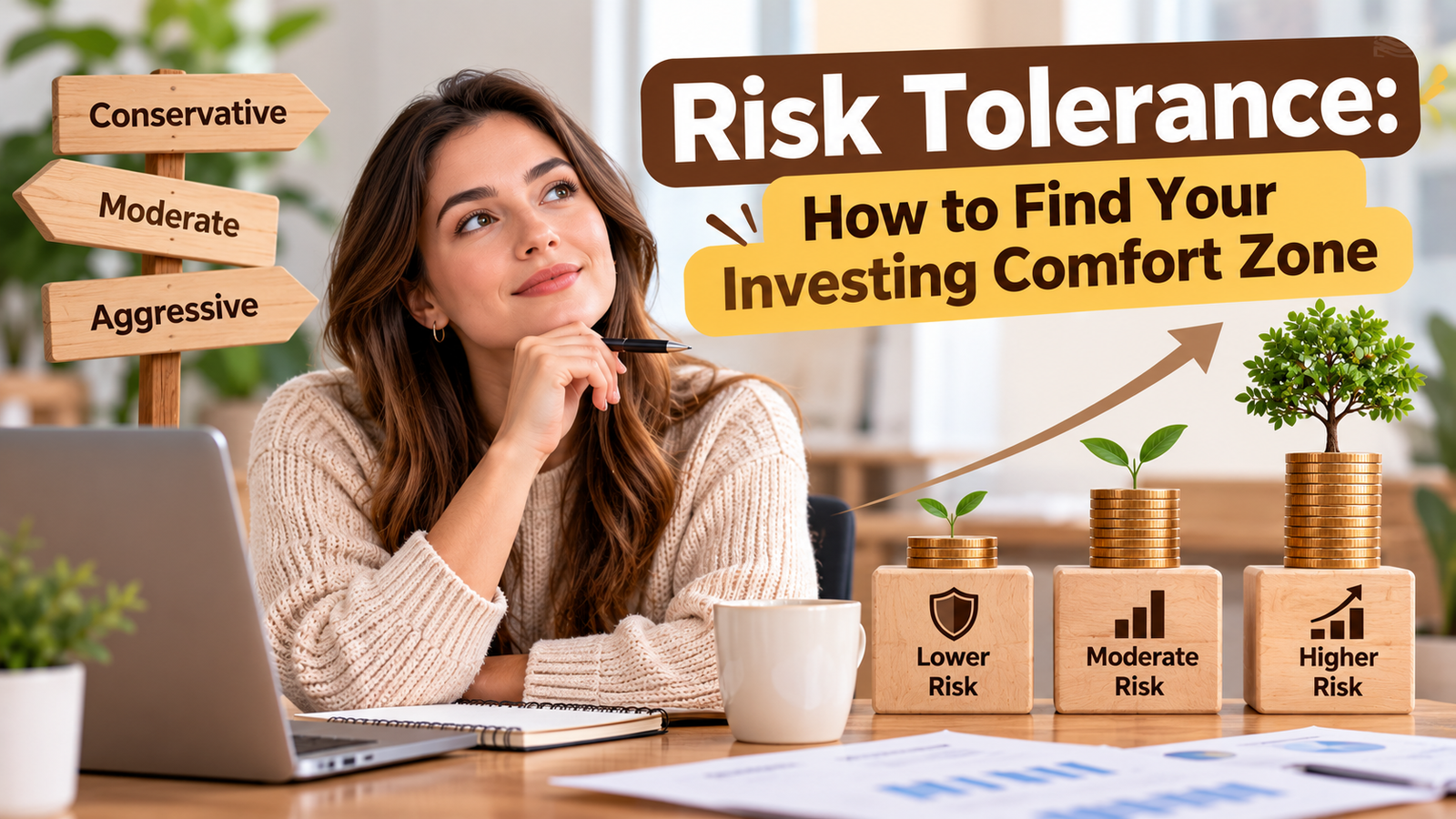
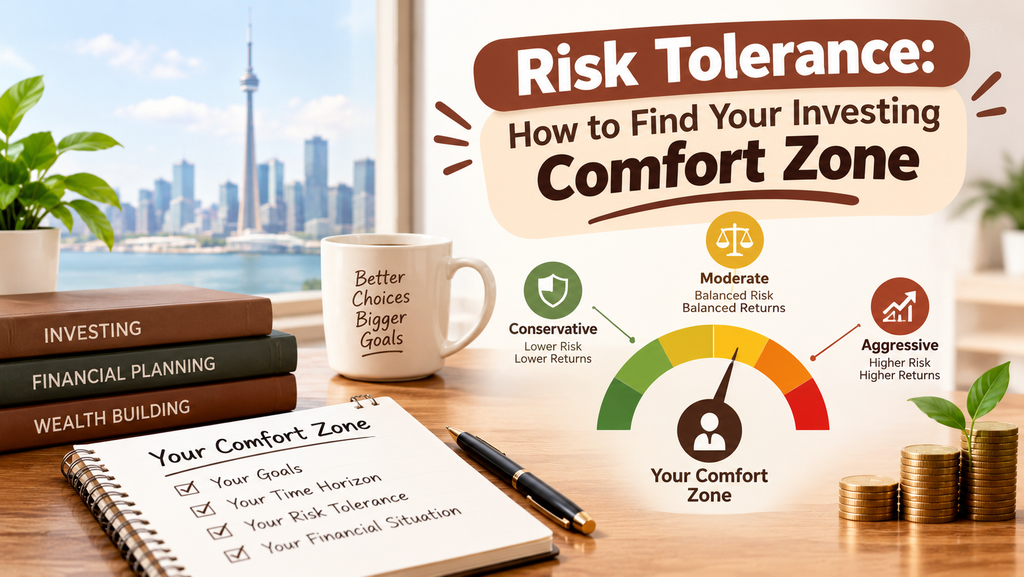
Conservative
Conservative investors prioritize protecting their money over growing it quickly. They’re uneasy with large swings and prefer stability. Their portfolios usually lean toward savings, bonds, and other lower-volatility assets, accepting slower growth in exchange for peace of mind.
Moderate
Moderate investors want growth but dislike extreme volatility. They typically hold a balanced mix of stocks and bonds. They can tolerate some losses in bad years because they expect better returns over time.
Aggressive
Aggressive investors chase higher long-term growth and can handle sharp drops without losing their nerve. Their portfolios are stock-heavy and may include higher-risk assets. They accept that big gains and big losses can both happen.
None of these is better than another. The right one is the one you can actually stick with.
What Influences Your Risk Tolerance?
Your comfort with risk isn’t random. Several factors shape it.
Age and time horizon. The longer you have until you need the money, the more time you have to recover from downturns. A 25-year-old saving for retirement can generally take more risk than a 60-year-old who retires soon.
Financial goals. Money for a house deposit in two years needs more protection than money for retirement in thirty.
Income stability. A steady salary makes losses easier to absorb than irregular earnings.
Savings and debts. A strong emergency fund and low debt give you more room to take investment risk.
Experience. People who have lived through market ups and downs often become more comfortable with volatility, while beginners may feel shaken by their first dip.
Personality. Some people are naturally cautious, others naturally adventurous. This is a legitimate factor, so be honest about yours.
7 Powerful Steps to Find Your Investing Comfort Zone
Step 1: Define Your Goals and Timelines
Start by listing what you’re investing for and when you’ll need the money. Short-term goals (under three to five years) call for safer assets. Long-term goals allow more risk.
Step 2: Check Your Financial Foundation
Before investing, make sure you have an emergency fund covering several months of expenses and a plan for any high-interest debt. Without that foundation, even a small market dip can force you to sell. [INTERNAL LINK: add a link here to your Growwxritik post on building an emergency fund]
Step 3: Ask Yourself the Hard Questions
Answer these honestly:
- If my portfolio fell 20% in a few months, would I sell, hold, or buy more?
- Could I leave this money alone for at least five years?
- Would a large loss affect my ability to pay bills?
- Do I check my investments obsessively and feel anxious when they fall?
Your answers reveal more than any quiz.
Step 4: Take a Risk Tolerance Questionnaire
Many brokers and financial websites offer free risk questionnaires. They ask about your goals, timeline, and reactions to hypothetical losses, then suggest a profile such as conservative, moderate, or aggressive. Treat the result as a starting point, not a verdict. The Investor.gov guide to asset allocation explains how risk and return are connected and how this feeds into your mix of investments.
Step 5: Look at Your Past Behavior
How did you react during previous periods of uncertainty, such as a market crash, a job loss, or a major financial scare? Past behavior is often a better predictor than what you say you’d do. Many people believe they’re aggressive until they watch real money disappear.
Step 6: Match Your Portfolio to Your Profile
Once you know your comfort zone, build an asset allocation to match it. Conservative investors might hold more bonds and cash, moderate investors a balanced mix, and aggressive investors mostly stocks. Spreading your money across different assets also helps cushion shocks, as explained in [INTERNAL LINK: add a link here to your Growwxritik post on diversification]. For further reading, Investopedia’s explanation of risk tolerance offers helpful definitions.
Step 7: Review and Adjust Over Time
Your risk tolerance isn’t permanent. Marriage, children, a new job, a health scare, or approaching retirement can all change it. Revisit your plan at least once a year and after any major life event.
Understanding the Risk and Return Trade-Off
To see why this matters, imagine three simplified portfolios:
| Portfolio Type | Typical Mix | Potential Return | Typical Swings |
|---|---|---|---|
| Conservative | Mostly bonds and cash | Lower | Small |
| Moderate | Balanced stocks and bonds | Medium | Moderate |
| Aggressive | Mostly stocks | Higher | Large |
These are general illustrations, not predictions. Actual results vary widely, and no investment is guaranteed. The key idea is that more potential growth usually means a bumpier ride.
How to Stay Calm When Markets Fall
Even with the right portfolio, downturns test your nerves. These habits help:
Have a written plan. Decide in advance what you’ll do during a drop. A plan you wrote while calm is more reliable than a decision made in panic.
Avoid constant checking. Looking at your portfolio daily magnifies anxiety. Check monthly or quarterly instead.
Invest regularly. Putting in a fixed amount each month, known as dollar-cost averaging, reduces the pressure of timing the market.
Remember history. Markets have fallen many times and have historically recovered over long periods, although there’s no guarantee of the future.
Keep cash for emergencies. This prevents you from selling investments at a loss to pay urgent bills.
Common Mistakes to Avoid
Overestimating your courage. It’s easy to feel brave in a rising market. Be realistic about how you’d feel during a real loss.
Underestimating your needs. Being too cautious can mean your money doesn’t keep pace with inflation, especially over long periods.
Copying someone else’s portfolio. A friend’s aggressive strategy may not suit your goals, timeline, or nerves.
Chasing hot trends. Buying into whatever is popular usually means taking risks you haven’t thought through.
Never reviewing your plan. Life changes, and your portfolio should change with it.
Investing money you’ll need soon. Short-term needs don’t belong in volatile assets.
Frequently Asked Questions
What is risk tolerance in investing?
Risk tolerance is how much loss or volatility in your investments you can handle emotionally and financially without abandoning your plan.
How do I find out my risk tolerance?
Reflect on your goals and timeline, answer honest questions about how you’d react to losses, take a free questionnaire, and consider how you’ve behaved during past market scares.
Does risk tolerance change with age?
Often, yes. Younger investors typically have longer time horizons and can take more risk, while those near retirement usually shift toward stability. Personal circumstances and personality matter as well.
What is a good risk tolerance for a beginner?
There’s no universal answer, but many beginners start with a moderate approach, then adjust as they gain experience and confidence.
Can I have a high risk tolerance but low risk capacity?
Yes. You may feel comfortable with big swings but lack the financial cushion to survive a loss. In that case, it’s wise to invest more cautiously until your finances are stronger.
Is low risk tolerance a bad thing?
Not at all. It simply means you value stability. You can still build wealth steadily with a suitable portfolio and consistent saving.
Final Thoughts
Finding your risk tolerance isn’t about proving how brave you are. It’s about being honest with yourself, so you can build a plan you’ll actually follow when markets get rough. The best portfolio is not the one with the highest possible return. It’s the one that lets you stay invested, sleep well, and keep moving toward your goals.
Start by defining your goals, check your financial foundation, answer the hard questions, and choose a mix that fits. Then review it regularly. Over time, understanding your risk tolerance will make you a calmer, more confident investor.
This article is for educational purposes only and isn’t financial advice. All investing involves risk, including the possible loss of money. Consider consulting a licensed financial professional about your own situation.