
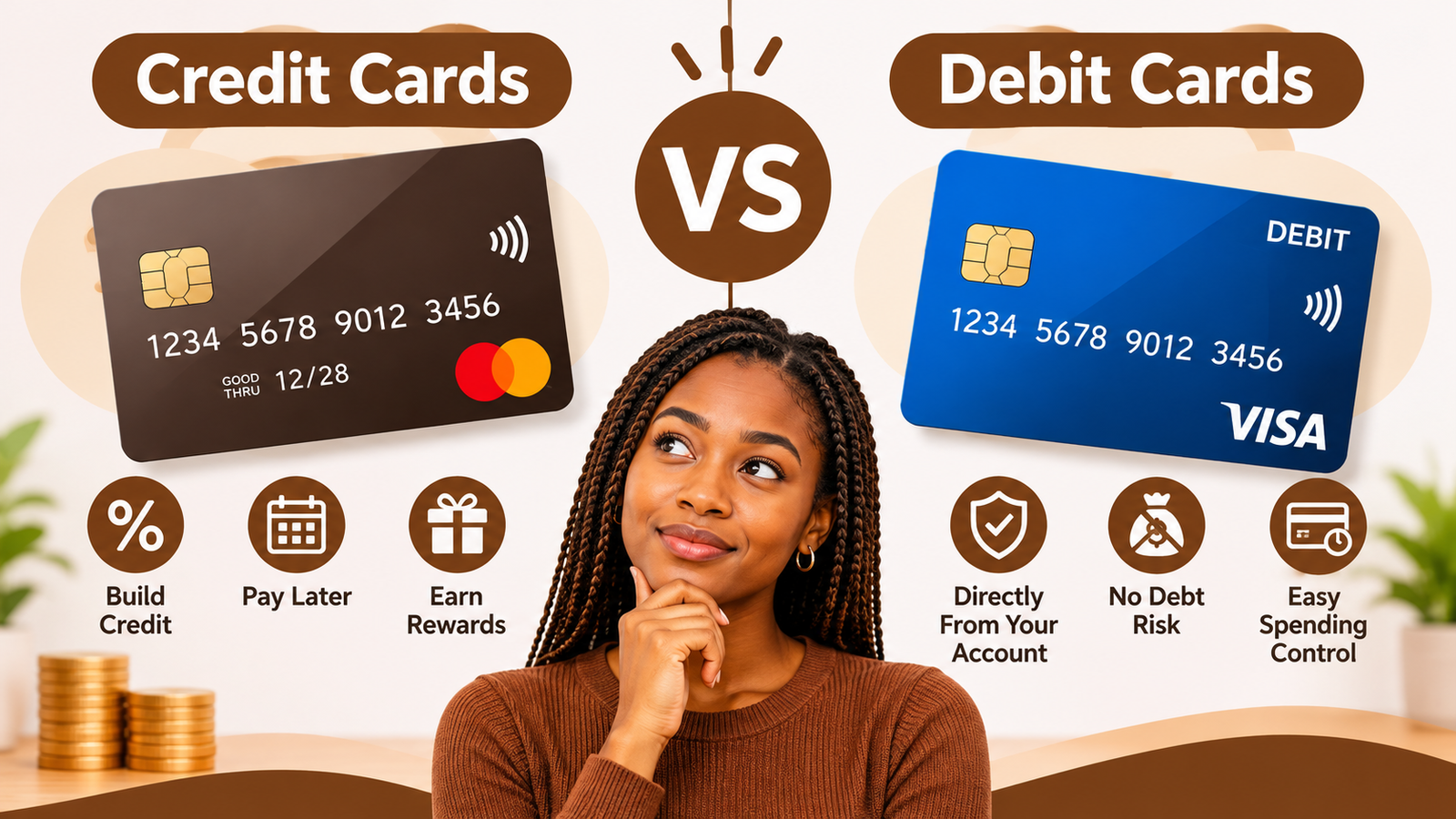
Both cards are the same size, both have a number and a chip, and both let you pay without touching cash. At the checkout counter, they look almost identical. Behind the scenes, though, they work in completely different ways, and choosing the wrong one for the wrong situation can cost you money.
Understanding credit cards vs debit cards is one of the most practical skills in personal finance. One card spends your own money. The other spends the bank’s money, which you then have to repay. That single difference affects your fees, your protection against fraud, your credit score, and your risk of falling into debt.
This guide breaks down the key differences in plain language, shows you when each card makes sense, and helps you decide how to use them.
What Is a Debit Card?
A debit card is linked directly to your bank account. When you pay with it, the money leaves your account almost immediately, either as an instant deduction or within a day or two.
If you have $500 in your account and buy something for $120, you now have $380. You can’t spend more than you have, unless your bank offers an overdraft facility, which usually comes with fees.
Debit cards are also used at ATMs to withdraw cash, check balances, and sometimes make deposits. Because you are only using your own money, a debit card cannot put you into debt.
What Is a Credit Card?
A credit card lets you borrow money from a bank or card issuer, up to a set limit, to pay for purchases. You don’t pay at the moment of purchase. Instead, you receive a statement each month and repay what you owe.
If you pay the full balance by the due date, you usually pay no interest. If you carry a balance forward, the issuer charges interest, often at a high rate. A credit card is essentially a short-term loan every time you use it.
Because you’re borrowing, using a credit card responsibly can help you build a credit history, which matters when you apply for loans, mortgages, or even rent an apartment.
Credit Cards vs Debit Cards: The Key Differences at a Glance
| Feature | Debit Card | Credit Card |
|---|---|---|
| Source of money | Your own bank balance | Borrowed from the card issuer |
| Spending limit | Your account balance | Your approved credit limit |
| Interest charges | None | Yes, if you don’t pay in full |
| Builds credit history | No | Yes, if used responsibly |
| Fraud protection | Varies, often weaker | Usually stronger |
| Rewards and cashback | Rare | Common |
| Risk of debt | Low | High if misused |
| Approval needed | Comes with a bank account | Requires credit approval |
Let’s look at each of these in more detail.
1. Where the Money Comes From
This is the foundation of the whole comparison. A debit card pulls from your existing funds. A credit card creates a debt that you promise to repay later.
That’s why debit cards feel safer for people who struggle with overspending, while credit cards demand more discipline. Swiping a credit card doesn’t feel like spending, because no money leaves your account that day. It’s easy to lose track.
2. Interest and Fees
Debit cards typically have no interest. You may pay small fees for things like overdrafts, foreign transactions, or using another bank’s ATM, but nothing compounds over time.
Credit cards can be very cheap or very expensive, depending on how you use them. Pay your balance in full every month and you’ll pay no interest at all. Carry a balance, and the interest can quickly add up and make your purchases far more expensive than the original price. Many cards also charge annual fees, late payment fees, and cash advance fees.
If you want to understand how these costs work, the Consumer Financial Protection Bureau’s credit card resources are a reliable place to start.
3. Impact on Your Credit Score
Here’s one of the biggest practical differences in the credit cards vs debit cards debate: debit card activity is generally not reported to credit bureaus. No matter how responsibly you use a debit card, it won’t build your credit history.
Credit cards do. Paying on time, keeping your balance low relative to your limit, and avoiding too many new applications all help build a strong score. The reverse is also true: missed payments and maxed-out cards can damage your score for years.
If you’re new to credit and want to build a history, a credit card used carefully is one of the most common ways to do it.
4. Fraud Protection and Security
Both cards can be stolen or compromised, but the consequences differ.
With a credit card, a fraudulent charge is the bank’s money at stake, not yours. You can dispute it, and in many countries the law limits what you can be held responsible for. In the United States, for example, your liability for unauthorized credit card charges is capped at $50 under federal law. The Federal Trade Commission explains how liability works for lost or stolen cards.
With a debit card, a fraudster is spending the actual cash in your account. Even if you eventually get it back, you may be without those funds for days or weeks, which can cause problems if you need the money for rent or bills. Debit card protections also vary more depending on how quickly you report the problem.
Rules differ from country to country, so check your own bank’s policies. In general, credit cards offer an extra layer of separation between a thief and your savings.
5. Rewards and Perks
Credit cards often come with rewards such as cashback, travel points, airline miles, purchase protection, and extended warranties. These perks can add real value, but only if you pay your balance in full. Paying 20% interest to earn 2% cashback is a losing deal.
Debit cards rarely offer meaningful rewards. Their appeal is simplicity, not perks.
6. Approval Requirements
You get a debit card simply by opening a bank account. There’s no credit check for the card itself.
Credit cards require approval. Issuers look at your income, credit history, and existing debts. If you have no credit history or a poor score, you may be declined or offered a card with a low limit and high fees.
7. Spending Control and Budgeting
Debit cards naturally limit your spending to what’s in your account, which makes them useful for sticking to a budget. If you’re using a system like [INTERNAL LINK: add a link here to your Growwxritik post on envelope budgeting], a debit card fits neatly into that approach.
Credit cards can be budget-friendly too, but only if you treat every swipe as money already spent. A good habit is to check your balance often and never charge more than you could pay off from your current bank balance.
Pros and Cons of Debit Cards
Pros
- No debt or interest
- Easy to understand and use
- Helps you stay within your budget
- Accepted almost everywhere
- No credit approval needed
Cons
- Doesn’t build credit
- Weaker fraud protection in many cases
- Few or no rewards
- Overdraft fees can be costly
- Purchases directly reduce your cash
Pros and Cons of Credit Cards
Pros
- Builds a credit history
- Stronger fraud and purchase protection
- Rewards, cashback, and perks
- Interest-free period if paid in full
- Useful in emergencies
Cons
- Easy to overspend and fall into debt
- High interest on unpaid balances
- Possible annual and late fees
- Misuse can damage your credit score
- Requires approval
When Should You Use a Debit Card?
Debit cards work best when you want to avoid debt and keep tight control of spending. They’re a good choice for:
- Everyday purchases like groceries and fuel
- Withdrawing cash from ATMs
- People who are still learning to manage money
- Anyone paying off debt who doesn’t want to add more
When Should You Use a Credit Card?
Credit cards work best when you’re disciplined and want the extra protection or benefits. They’re a good choice for:
- Online shopping, where fraud protection matters
- Travel bookings and hotel or car rentals
- Large purchases where you want buyer protection
- Building a credit history
- Earning rewards on spending you’d do anyway
How to Use Both Cards Wisely
You don’t have to pick one forever. Many financially healthy people use both, each for a specific purpose.
Pay your credit card in full each month. This single habit removes interest from the equation and keeps credit cards a tool rather than a trap.
Set up automatic payments. At minimum, automate the minimum payment so you never miss a due date.
Keep your credit utilization low. Try to use less than 30% of your available limit, since high utilization can hurt your score.
Monitor your accounts. Check your statements and bank app regularly for suspicious activity.
Avoid cash advances. Withdrawing cash on a credit card usually triggers high fees and immediate interest.
Keep an emergency fund. Having savings means you won’t need to rely on credit when something unexpected happens. [INTERNAL LINK: add a link here to your Growwxritik post on building an emergency fund]
For a quick, neutral comparison of both card types, Investopedia’s guide to debit vs. credit cards is a handy second reference.
Frequently Asked Questions
Which is better, a credit card or a debit card?
Neither is better in every situation. Debit cards are better for avoiding debt, while credit cards are better for building credit, earning rewards, and getting stronger fraud protection, provided you repay on time.
Can a debit card build my credit score?
Generally no. Debit card activity usually isn’t reported to credit bureaus, so it won’t help your credit history.
Is it safer to shop online with a credit card or a debit card?
A credit card is generally safer because fraudulent charges involve the lender’s money, not the cash in your bank account, and dispute processes are often stronger.
Can I get into debt with a debit card?
Not in the traditional sense, but you can overdraw your account if your bank allows it, which may lead to fees and a negative balance.
Should a beginner start with a credit card or a debit card?
Start with a debit card to learn spending habits. Once you’re comfortable budgeting, consider a basic credit card with a low limit and always pay it off in full.
Final Thoughts
The difference between credit cards vs debit cards comes down to whose money you’re spending. Debit cards use yours, which keeps you out of debt but offers fewer protections and no credit-building benefit. Credit cards use the lender’s, which gives you stronger security, rewards, and a path to a good credit score, but demands discipline.
The smartest approach is often a mix: debit for everyday spending you want to control, and a credit card for purchases where you want protection and rewards, paid off in full every month. Whichever you choose, understanding how each one works puts you in charge of your money instead of the other way around.
This article is for educational purposes only and isn’t financial advice. Card terms, fees, and consumer protections vary by country and provider, so check with your bank or a licensed professional.